The Relationships Between Peer Commanders and its Influence on the Fight
Captain Chris Chavez
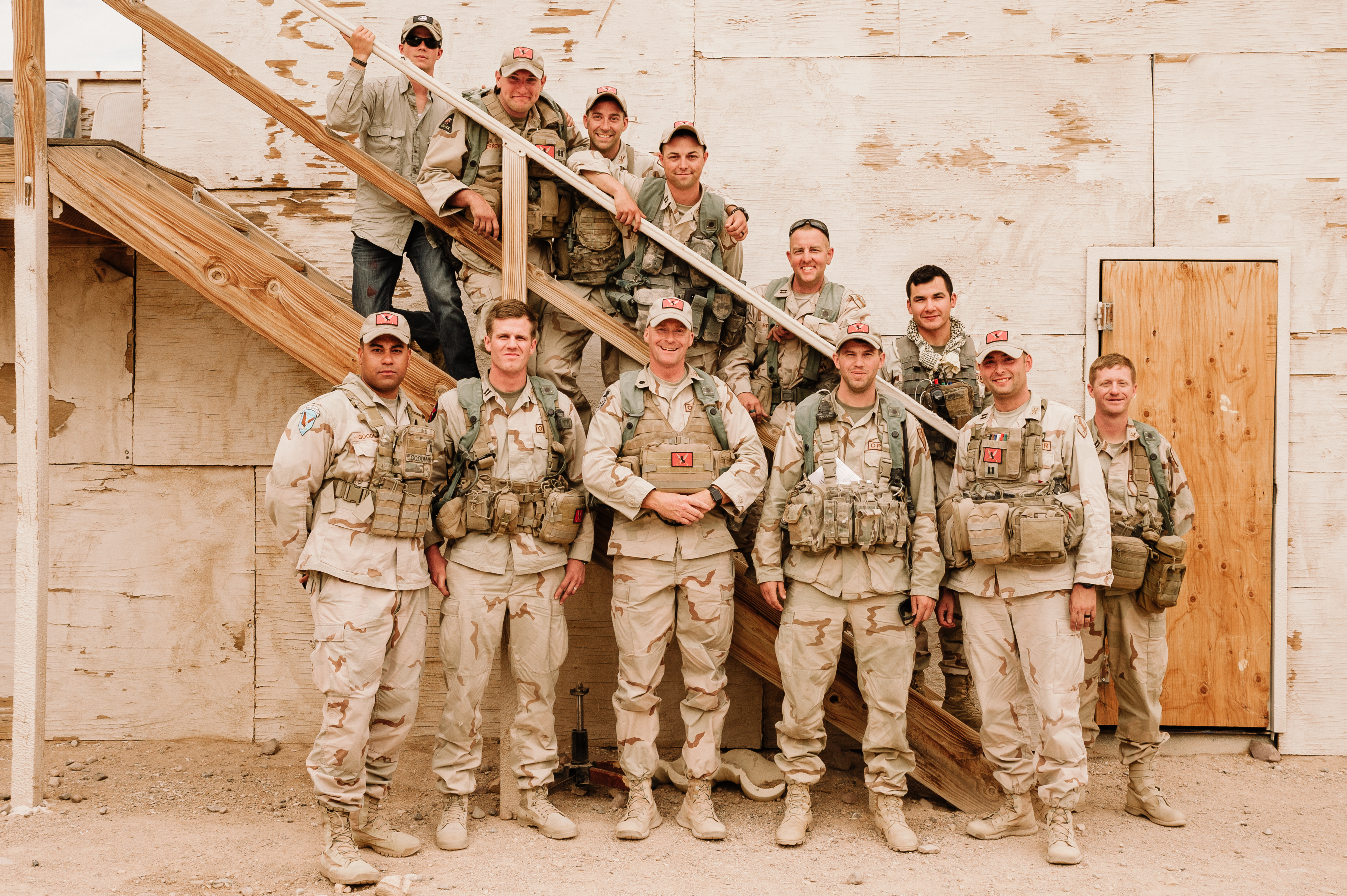
Photo courtesy of Lisa Lupo, lisaveephoto.com
The relationships between peer commanders is a critical part of a unit’s success. Without full trust in the motives, abilities, and operational understanding of the commanders on your left and right flank, a commander cannot concentrate fully on his or her piece of the overall operation. “Peer relationships,” says Brigadier General Patrick Donahoe, Deputy Commanding General, Eighth Army, “are the most important ones you have.” He goes on to say that without trust between peers, trust up and down the chain of command will not exist. The Blackhorse has created a culture of not just professional respect, but personal friendship between the troop and company commanders. I would argue that it is one of the many things that makes the 11th Armored Cavalry Regiment a successful unit, and a personal and professional privilege to those who have served in its ranks.
Prior to taking my first command, I thought I would be entering an overwhelmingly political atmosphere, fraught with officers attempting to highlight their successes, sometimes at the detriment of their fellow commanders. As the Squadron Commander handed me the guidon of Hawg Company, 2nd Squadron, 11th Armored Cavalry Regiment, he said that I had his full trust and support. I thought that was just the thing he said at change of command ceremonies. I quickly learned though that trust was the cornerstone upon which the entire command climate in the 11th Armored Cavalry Regiment is built.
(Photo courtesy of 11th ACR PAO Office)
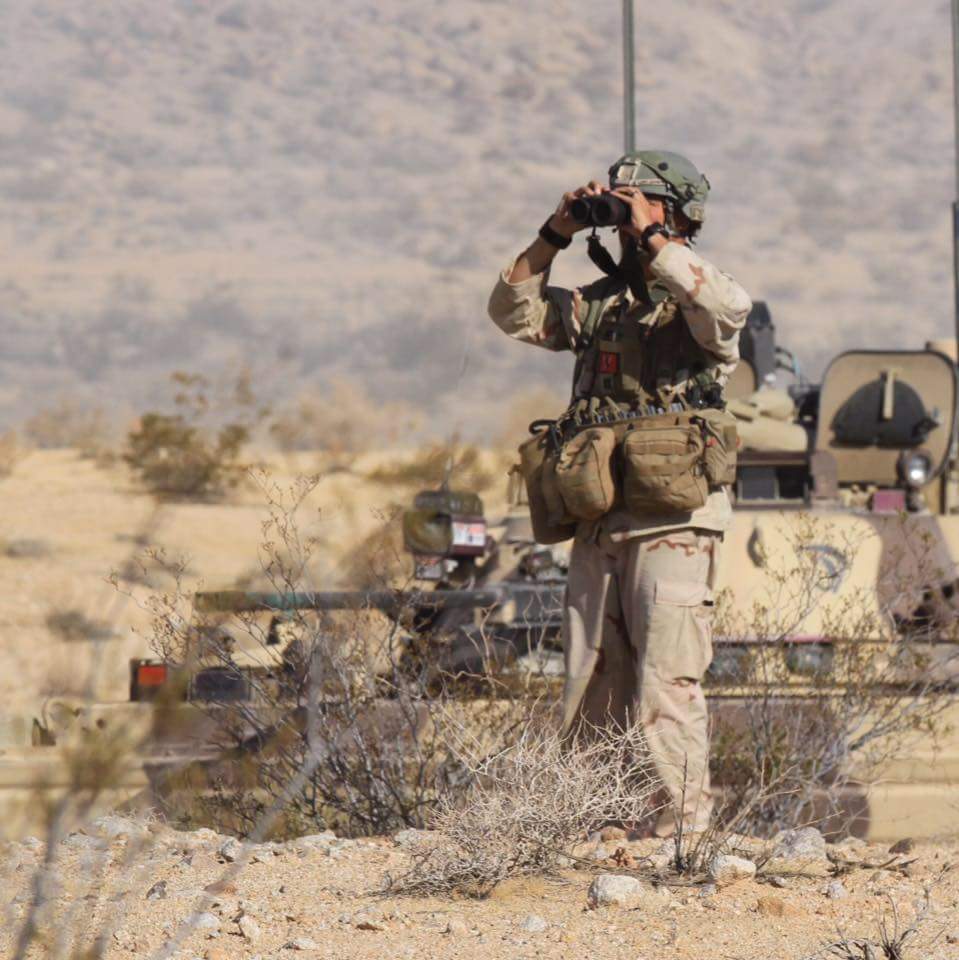
Throughout my first command, the genuine trust and desire for success across the Brigade Tactical Group (BTG) was always apparent. In one such instance, the BTG’s first echelon encountered the enemy in and around a critical piece of Key Terrain, much farther north and in greater numbers than we expected. The plan therefore changed significantly and dynamically. The plan became that I, commanding Gurkha Mechanized Infantry Battalion (MIBN), would exploit the initial penetration made by Killer Troop (the Regiment’s anti-tank troop equipped with BRDMs and HOT-3 anti-tank missiles), who had held their ground to the last vehicle, often engaging M1s and M2s at less than 100 meters. When I was cued by Killer’s commander, CPT Dave Radke, Gurkha, now with smoke tracks, attacked forward, clearing out the remaining tanks and cavalry fighting vehicles. We held the point of penetration open while in direct-fire contact, and eventually were destroyed to the last track. These actions, along with the obscuration created by the smoke tracks, allowed Sinister MIBN to penetrate behind the enemy’s forward element, separating their echelons, and continue their attack.
Without my full trust in Killer 6, the timing of the operation would have been disrupted, and would have likely led to disaster. Likewise, if Captain Mike Gonzalez, commanding Sinister MIBN didn’t trust my word that the route was open, he would have not been able to attack through the obscuration before the smoke tracks were destroyed. At the after-action review (AAR), CPT Gonzalez was all-too-ready to attribute his success on the efforts of his fellow commanders. In his eyes, Sinister’s success wasn’t his alone; it belonged to everyone that fought to make it possible.
This is not an isolated story, but instead a small glimpse of the relationship between troop and company commanders in the Blackhorse. Each of us genuinely cared about the success of our fellow commanders, understanding that the success of our fellow MIBNs meant success for the BTG. Our ultimate mission was to give the Rotational Training Unit (RTU) the hardest fight possible, and to accomplish this we had to be overwhelmingly successful.
The trust that grew from these relationships made communicating much easier. The Regimental Commander at the time, COL Joseph Clark, would often say that we “sounded like fighter pilots on the radio.” We often spoke in a sort of short-hand, sending out critical information very quickly. We trusted that the commanders on our flanks either had the same understanding of the fight that we did, or they would adjust their disposition based on the recommendations of our peer commanders. MIBNs would regularly change roles mid-mission. The MIBN that was designated the decisive operation would often become a shaping operation at the recommendation of that MIBN’s commander. This ability to dynamically change roles, and often change task organizations in-stride continues to make Blackhorse commanders true practitioners of Mission Command. This is only possible after gaining the trust of the commanders at higher echelons. BG Donahoe commented recently that, “mission command rests on a bulwark of trust. Trust is developed through shared experience. There is no replacement for the multiple reps required to develop trust.”
Our shared experience of fighting in the desert ten times per year, and the overarching culture of selflessness with regard to sharing success, created an environment of trust across the formation. This trust, and the relationships upon which it was built, transcends service in the Blackhorse. Troop and company commanders, even after moving to new units, talk on a daily basis. We have a chat that is well over a year old that is still in daily use. When a new commander takes a guidon, they are added to the chat. Having spoken to commanders of augmentation units sent to fight with the Blackhorse, called OPFOR Augmentation Units (OAU) or Guest Blackhorse, they often said how jealous they were of the friendships that developed between the Blackhorse commanders, and that nothing like that existed in their units. These personal and professional relationships continue to make the Blackhorse a premier mechanized formation that teaches invaluable lessons to our army, one blinking MILES light at a time.
Copyright, UndercoverDonovian (Captain Chris Chavez), 2019. All Rights Reserved.


 Undercover Donovian
Great post 🙂
LikeLiked by 1 person
Well done indeed! Look forward to reading more. Thanks again for all you do!
LikeLiked by 1 person