Disclaimer: I am absolutely NOT an expert on how to win a military campaign in Afghanistan, and if history is any indication, that person does not exist. I’ve had several people ask me my thoughts on what’s going on in Afghanistan, so here it goes:
I’ve been having a tough time trying to provide an objective assessment of what I think about what’s going on in Afghanistan, and I know I’m not alone in this. I’ve seen a ton of Operation Enduring Freedom (OEF) and Operation Freedom Sentinel (OFS) veterans voicing their displeasure at seeing what many believed to be an inevitability. However inevitable though, the personal connection to Afghanistan many of us have creates immensely raw emotions that are difficult to voice.
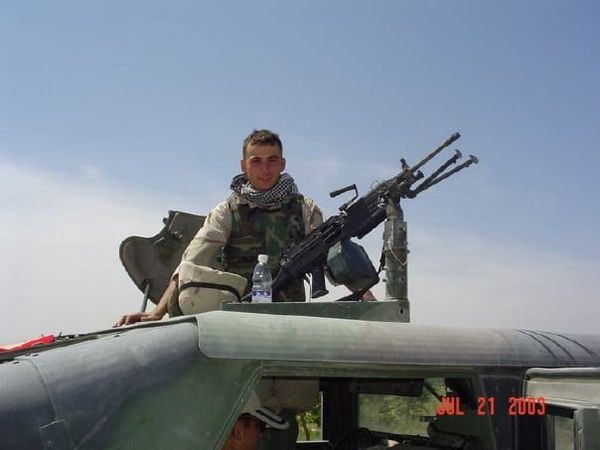
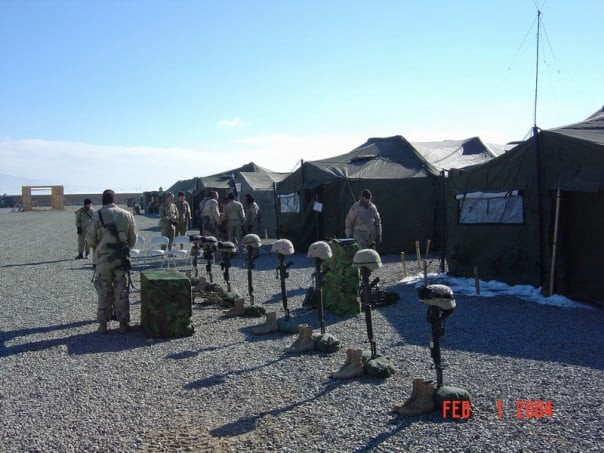
For me, Afghanistan set me on the path for a military career that I didn’t know I’d pursue. I worked with phenomenal people in my unit, and was blessed to be attached to a Special Forces team upon arrival in-country. I thought I’d get a cold or at least indifferent reception from the SF team, but instead the members of that team took a young 19 year old Private First Class and treated me as a valued member of their organization. I looked up to those guys, and still am in contact with several of them even 18 years later. That experience shaped how I interact with people in the military, and I am immeasurably better for it. Afghanistan was also the first time I’d experienced real trauma, danger, violence, and loss. My teammate was killed there along with seven others on January 29, 2004, and the loneliness of that empty tent has never left me. I’ve had other dear friends injured and killed there, and while I was not physically injured I’ve never been the same person after returning. Afghanistan was also the first time that I felt part of something truly important. I felt that we were there for all the right reasons, and I felt that we would appreciably improve the lives of the Afghan people. After I left, I missed it. For the all the bad things that happened, I missed being there and doing the work. It is for all these reasons that trying to be objective is excruciatingly difficult.

Now for the attempted objectivity. Three US Presidents ran and were elected by the American public saying they were going to withdraw from Afghanistan. They were right to do so. Ultimately though, I am of the opinion that all knew how it would end, and they wanted to avoid the political consequences of being the guy left holding the bag. Finally, President Biden made the call. He owns this now, and for better or worse, it will be part of his legacy. Will it hurt him? Maybe. We will have to see. The American electorate hasn’t been particularly interested in Afghanistan for most of the conflict, and while the images from Hamid Karzai International Airport are truly horrific, I’m not sure how much it will factor into the outcome of future elections. I know there are people that disagree with this and want to lay this whole thing at his feet, and that’s not completely unfair. I’ve seen the clips of the President’s assessment that Kabul would not be another Saigon, and that has proven to be painfully incorrect. I still can’t bring myself to watch his address from a few days ago, and I’m not sure when I’ll manage to do so.
My question however is what the administration was supposed to say. Should they have openly said it would be a failure? I think they were wise to stay cautiously optimistic. The Afghan military has lost roughly 66,000 soldiers killed in action throughout the conflict. They have fought for their country at horrific cost and saying the contrary is a gross injustice to their military. Of course they weren’t up to the proficiency that we would like, and perhaps our military needs to reassess how we advise partner militaries. However, I don’t think anyone would have guessed that it would happen as quickly as it did, and in the absence of a crystal ball, I don’t think that was a bad assumption. There are people who know far more than me on this subject though. Could the administration have done things differently? I’m sure. How much of a difference it would have made is hard to assess though. Don’t get me wrong, I’m angry. I just don’t know who to be angry at, and why.
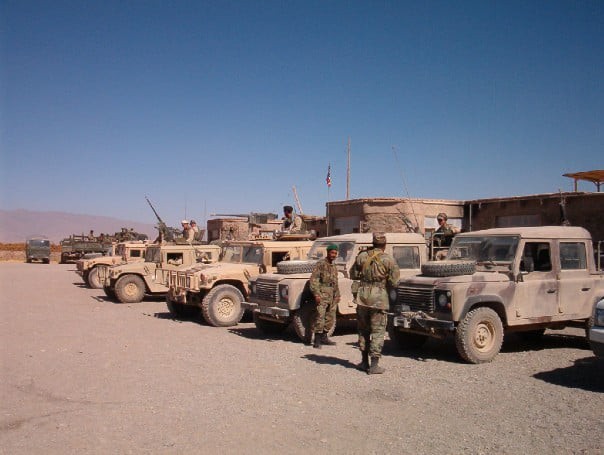
The one thing I am sure of however is that it was time to go. From the beginning of the conflict, we never had well-defined, achievable strategic military objectives, which are requirements for military success. Capture of an enemy capital, destruction of a standing army, and seizure of key terrain are examples of military objectives. Neither “nation building, “ “building partner capacity,” nor “open-ended revenge” are military end states. The overall strategic objectives of the invasion of Afghanistan were to deny it as a safe haven for international terrorism and punish those that perpetrated the September 11 attacks, both of which are far too open-ended to be military objectives. To end a conflict like this, there MUST be a political conclusion because the alternative is an indefinite military operation. It is my opinion that we should have started withdrawing either in December 2001 when the Taliban were originally driven from power or in May 2011 after Osama bin Laden was killed. Those two key events would have served as clear punctuation to our military presence in Afghanistan. Absent a clear military achievement, the withdrawal had to be a political decision.
There was always going to be the “last plane” out of Kabul. Always. There was always going to be more people trying to get out of the country as we withdrew, and whether we pulled out in December 2001 when the Taliban fell and the Karzai government stood up, May 2011 when Osama bin Laden was killed, May 2021 as the last administration wanted, August 2021, or many years later, I think the scene at the airport was largely unavoidable. Could it have been smoother? Yes, but it was always going to be a chaotic human tragedy, and the political outrage we are seeing now would have been there regardless of how it went down. The lapel pins may have been different on the talking heads and the news stations would have been different, but the “outrage” would still be there. This is, again, because we did not take advantage of key military successes to transition to withdrawal.
So what did we accomplish while we were there? First, we put a lot of bad people in the ground. A LOT. We ensured that they could not hurt people anymore, and that’s important. Second, we showed a generation of Afghans that life doesn’t have to be like it was under the first Taliban rule. I think that will have a lasting impact on the strength and fortitude of the resistance that is sure to spring up. Third, and this is the hardest lesson for current and future military planners, we learned what not to do. We’ve all read the books and know intellectually what not to do, but now we have a painful two decade long example of what failure to execute properly looks like. We can learn from this, we can rise from the ashes, and be a better military for it.
So where do we go from here? The way I see it, there are three options, and none of them great. First, engagement with the Taliban government. The problems with this are obvious and numerous, so won’t really go deeply into that. The second option is, after the evacuation is over, to engage with resistance groups much like we did immediately following the invasion. There are undoubtedly groups standing up. We’ve seen Ahmad Shah Massoud’s son back in the news and Northern Alliance flags flying. What engagement looks like with these groups is hard to say, but we have mechanisms to do it that which don’t require huge footprints within the country. The third is by far the worst option, and that is a complete disengagement with Afghanistan. We’ve been successful in the open-ended objective of denying Afghanistan as a refuge for international terrorism, and this option would negate all of the successes that were bought at great cost to human life and national treasure. This would make the war in Afghanistan a complete failure.
I hope this helps give you a glimpse into how many of us are processing the last week or so. In short, it’s been rough and it’s complicated.
 Undercover Donovian